The Best!N Food awards, which celebrate the most outstanding campaigns in the food sector, have recognized our work for Cervezas Alhambra with a Gold award in Brand Building. This recognition highlights the journey we have built alongside the brand over recent years, creating and consolidating the “unhurried” territory.
We also received a Silver award in Branded Content for Sosegá, the campaign we developed to mark the brand’s centenary: a new, unhurried flamenco style (palo), inspired by the rhythm of Granada and created in collaboration with fourteen leading figures of the genre. With this project, we took the brand’s philosophy of living unhurriedly one step further—transcending advertising to become a true cultural expression.
Congratulations to all the teams and collaborators who made this project possible.
The United States and international tourism markets have entered a new phase defined by recovery, stabilization, and evolving visitor behaviors. After a surge in demand during 2022–23, often described as “revenge travel,” the industry has begun to level out in 2024–25, with volumes now meeting, and in some cases exceeding, historic highs. Growth, however, remains uneven across regions and traveler segments, with leading destinations such as Las Vegas, NV, Orlando, FL, and Denver, CO sustaining strong rebound trajectories.
In response to this new market equilibrium, major U.S. cities and tourism hubs have adopted refined strategies that emphasize domestic-first growth, behavioral clustering, geographic-cohort modeling, channel segmentation, personalized service alignment, and integrated digital experiences. These approaches are reshaping the competitive landscape and creating multi-layered value propositions for travelers.
Las Vegas, in particular, has undergone a fundamental transformation in its visitor profile, reflecting structural shifts in who comes, how they spend, and what they seek. This research analyzes tourism evolution in Las Vegas using official data from the Las Vegas Convention and Visitors Authority (LVCVA) and introduces new visitor audience segmentations based on spending patterns, behaviors, and motivations. The findings identify three distinct market segments that are redefining the city’s tourism paradigm, each with unique characteristics that demand tailored marketing strategies.
- American “High-Level” tourist (premium spenders)
- Upper-middle-class “Specific Experience” tourist
- The growing Hispanic segment
THE METAMORPHOSIS OF LAS VEGAS
Las Vegas, historically known as the “Entertainment Capital of the World,” has undergone a pattern-setting evolution in its visitor structure that transcends mere seasonal or cyclical fluctuations in tourism. Data from the 2022-2024 period reveal a fundamental transformation in demographic composition, spending patterns, and travel motivations that suggest the consolidation of a new tourism model.
The central hypothesis of this analysis is that the Las Vegas tourism market has organically segmented into distinct audience groups. For the purposes of this research, we will conduct a deep dive into three specific archetypes: the American “High-Level” tourist with a higher spending capacity ($5,000+ per month); the upper-middle-class “Specific Experience” tourist seeking one of a kind, defined events; and the growing Hispanic segment with differentiated consumption patterns. This segmentation is not merely demographic; it responds to structural changes in consumption preferences, the democratization of access to the destination, and the ethnic diversification of the United States.
The analysis is based on primary data from the LVCVA Visitor Profile Study 2022-2024, complemented by statistics from Statista and qualitative analyses by LLYC’s deep learning team that allow for a holistic understanding of these new tourism paradigms.
THEORETICAL FRAMEWORK: FROM BROAD ACCESS TO TARGETED SEGMENTATION
The Traditional Paradigm vs. The New Model
Traditionally, Las Vegas operated under a “democratization of luxury” model, where the value proposition focused on offering premium experiences at affordable prices to attract a mass market. This model, successful for decades, was characterized by:
- Cross-subsidies (cheap rooms financed by casino revenues)
- Homogeneous visitor profile (predominantly Caucasian, middle class)
- Motivations focused on gambling as the main activity
- Extended stays (4-5 nights average)
“The latest data (2022–2024) shows that Las Vegas visitors are splitting into distinct groups, each looking for different experiences, services, and price levels. This shift mirrors bigger social trends like widening income gaps, growing cultural diversity, and a stronger focus on experiences over things.”
The Theory of Experiential Segmentation
“The research shows that today’s visitor segments go beyond age or income and are defined by lifestyles and experiences. Each group differs not just in how much they spend, but also in how they see value, entertainment, and status in Las Vegas.”
SEGMENT ANALYSIS: THE THREE ARCHETYPES OF MODERN TOURISM
High-Level Segment: American “High-Level” tourist
Demographic and Economic Profile:
- Household income: $150,000+ annually (25% of total visitors)
- Monthly discretionary spending: $5,000+
- Age: 35–50 years, predominantly established Millennials and Gen X
- Education: 85%+ college graduates
- Origin: Mainly California (31%), followed by other Western states
Behavior Patterns: Data from the 2024 LVCVA reveals that this segment represents approximately 15–20% of total visitors but contributes disproportionately to destination revenue. Their average spending per trip reaches $3,500–5,000, significantly higher than the overall average of $1,200.
This archetype is characterized by:
- Frequency of visits: 3–4 times a year, stays of 2–3 nights
- Accommodation: $300–500+ per night in premium suites
- Gaming behavior: Budget of $1,500–3,000 per trip, preference for high-limit tables
- Dining: $200–400 per capita at celebrity chef restaurants
- Entertainment: Regular attendance at premium shows ($150–300 per ticket)
Insight
This segment has developed a relationship of “informal membership” with Las Vegas, where the destination functions as an extension of their urban-professional lifestyle. They don’t seek escapism, but rather an amplification of their socioeconomic status.
Experience-driven segment: Upper-middle-class occasional tourist
Demographic and Economic Profile:
- Household income: $80,000–$150,000 annually (40% of total visitors)
- Age: 28–55 years
- Motivation: Event-driven (weddings, birthdays, conventions, sporting events)
- Origin: Nationally distributed, with strong representation from the Midwest and South
Behavior Patterns: This segment, which represents approximately 45–50% of visitors, is characterized by less frequent but highly planned visits. Their average trip expenditure ($1,500–2,500) is slightly above the overall average of $1,200.
- Frequency of visits: 1–2 times every 2–3 years
- Duration: 2–4 nights, depending on the event
- Accommodation: $150–250 per night, Strip Corridor preferred
- Gaming behavior: Recreational budget of $300–600
- Planning: 60+ days in advance, high sensitivity to offers and packages
Insight
For this segment, Las Vegas is not a recurring destination but a “lifetime experience” tied to special occasions. Its perceived value centers on uniqueness and the ability to create memorable milestones.
Hispanic Segment: A Growing Emerging Market
Demographic and Economic Profile:
- Household income: $40,000–$120,000
- Family structure: Larger groups (average 3.2 people vs. 2.4 overall)
- Representation: 16% of total visitors (up from 10–11% post-2020)
- Origin: California (40%), Texas (25%), Arizona (15%)
Differentiated Behavior Patterns: This segment demonstrates distinct consumption and travel patterns. Their average trip expenditure ($1,600–2,000) is moderately above the overall average of $1,200, with spending skewed toward food and entertainment.
- Seasonality: High concentration around Hispanic holidays and family vacations
- Duration: Longer stays (4.1 nights vs. 3.4 overall)
- Food & dining: 25% higher than average ($650 vs. $519)
- Group behavior: Preference for traveling in extended family groups
- Entertainment: Strong attendance at Latin music shows and culturally relevant events
Insight
This segment represents one of the fastest-growing visitor groups. Their loyalty is tied to cultural resonance and group-oriented experiences, making them a key driver of future growth.
STRATEGIC IMPLICATIONS: TOWARDS TRI-SEGMENTED MARKETING
Redefining the Value Proposition
The findings suggest the need to move away from the “one-size-fits-all” model toward segment-differentiated strategies:
For the High Level Segment:
- Development of ultra-premium experiences and concierge services
- Sophisticated loyalty programs with aspirational benefits
- Direct marketing and one-to-one relationships
- Exclusive events and VIP access
For the Specific Experience Segment:
- Event-centric packages with added value
- Digital marketing targeted for special occasions
- Strategic alliances with event planners
- Early-bird offers and seasonal promotions
For the Hispanic Segment:
- Culturally relevant programming
- Marketing in Spanish and Hispanic channels
- Family and group-friendly offers
- Events during key holidays
Evolution of the Revenue Mix
The data suggests a fundamental transformation in Las Vegas’ revenue structure. While gambling historically represented more than 60% of total revenue, new segments show a diversification into:
- Premium Accommodations: 35% increase in average rates ($179/night in 2024)
- Food & Beverage: Historic record of $615 per visitor
- Non-gaming entertainment: 40% growth in shows and attractions
- Personalized Experiences: Concierge Services and Curated Experiences
CONCLUSIONS AND PROSPECTIVES: THE FUTURE OF THE TOURISM PARADIGM
Validation of the Tri-Segmental Hypothesis
The data strongly confirm the initial hypothesis about the existence of three distinct segments in the Las Vegas tourism market. Furthermore, they suggest that this segmentation is not temporary but structural, reflecting broader demographic and socioeconomic changes in the U.S. market.
The convergence of multiple factors—ethnic diversification, income polarization, experiential consumption, and lifestyle changes—has created conditions for natural segmentation that transcends traditional tourism marketing variables.
Implications for Industry
This new segmental reality requires unprecedented operational sophistication:
- Differentiated infrastructure: Real estate developments that simultaneously serve multiple price points
- Personalized Technology: CRM systems capable of delivering segmented experiences
- Multicultural talent: Staff trained to address the cultural specificities of each segment
- Strategic partnerships: Alliances with brands and services that amplify the value proposition of each segment
Outlook 2025-2030
The identified trends suggest a deepening of this segmentation over the next five years. The following are anticipated:
- Growth of the Hispanic segment to 20-25% of total visitors
- Accelerated premiumization of the High Level segment, with average expenses exceeding $6,000
- Digitalization of the experience for the Specific Experience segment
- Emergence of sub-segments within each main category
In Summary
Las Vegas is a prime example of how a long-established destination can reinvent itself as the market changes. Its strength lies in offering multiple types of value at once—luxury, entertainment, affordability—while still keeping its brand identity clear and consistent.
Looking ahead, Las Vegas’s success will hinge on how well it can deliver on its three key visitor segments. The city must excel in each area while holding onto the common threads that make it a one-of-a-kind global destination.
The data makes it clear: Las Vegas is moving toward a more refined, inclusive, and resilient tourism model—one that other mature destinations can look to as a guide when facing similar challenges.
Sources:
- LVCVA Visitor Profile Study 2022-2024
- Tourism Economics International Visitation Data
- Heart+Mind Strategies Research Reports
- Statista Tourism Analytics
- U.S. Census Bureau Demographic Projections
Managing tourism promotion in global markets today requires a precise combination of institutional storytelling and brand activation capabilities. In this context, Turismo de Islas Canarias has awarded us the contract to lead its corporate communications and Brand PR strategy—a key project to further strengthen the archipelago’s positioning as a leading global destination.
The contract, with an initial duration of four years and the possibility of extension, represents one of the largest projects in the sector in Spain. The scope includes the planning, coordination, and execution of an integrated strategy covering brand journalism, media relations, digital ecosystems, and crisis communications.
“We are proud to partner with Turismo de Islas Canarias in this new phase. We will bring all our talent to the table to consolidate its global leadership and project a stronger, more recognized, and more sustainable brand than ever. We are ready to elevate the recognition of the Canary Islands to a new level, connecting its unique essence with the expectations of the global traveler of the future,” said Rafa Pérez, Senior Director of Strategy in Europe.
This milestone reinforces our expertise in the tourism industry and builds on the trust placed in us by other leading institutions such as Turespaña and Turismo de Tenerife. The award confirms our ability to manage large-scale, complex international projects, delivering strategic solutions that enhance the competitiveness of destinations in a global environment and drive growth in key sectors.
The corporate monologue is dead. For decades, brands built their reputation from the comfort of a one-way sender: they broadcast a message, controlled the channel, and measured the impact. Today, that model is obsolete. Companies no longer dictate what they are; they continuously negotiate it in a saturated environment where absolute control is an illusion and attention is the most valuable asset in the market.
This March’s trends reveal a structural shift in how influence is built and elevated: whether transforming a financial report into an entertainment format, pushing the CEO into new social spaces, or assuming the “cost” of brands entering spaces where the audience has already defined you or shaping content alongside AI about you.
The public, content creators, and now generative agents are the ones who build perceptions. The strategic question is no longer what we want to say, but how we manage to influence, fascinate, and participate in what is already being said about us. Because more than 90% of a brand’s conversations happen without the brand being present.
01. CORPORATE ENTERTAINMENT: THE END OF THE INVISIBLE REPORT
When financial results also want your attention.
Corporate transparency has ceased to be a mere data exercise to become a narrative resource. The traditional annual report, buried in a PDF on the corporate website and intended to be a press conference, is an outdated format. Today, companies face an audience, both internal and external, that demands stories and transparency. And these milestones are rewarded when translated into current digital codes.
Some brands are already understanding this: IKEA has integrated its annual results through real stories and experiences from its staff (humanizing the brand at the same time). The same happens with Apple, which elevates its sustainability report to the category of a high-level audiovisual piece, or Tony’s Chocolonely reporting its progress firmly anchored in its social purpose.
Corporate communication also needs its moment of attention. To make these high-value communications reach and resonate, it is interesting to dress them with the same consumption or entertainment codes as native content, thus managing to become part of the cultural conversation.
02. THE LEADER’S EXPOSURE: FROM THE OFFICE TO THE FEED
The CEO as the main influence asset.
The demand for humanization has pushed executives out of their offices to enter the algorithmic arena. This public exposure is a double-edged sword: it generates unprecedented trust and reach when executed with closeness, but acts as a crisis accelerator when internal reality cannot support the weight of the projected persona.
The fast food sector has given us this month a masterclass in leadership exposure. That the CEO of Burger King publishes his personal phone number to receive direct feedback is an exercise in radical vulnerability that shortens the distance between the corporation and the customer.
At the same time, we witnessed the CEO of McDonald’s recording himself trying his new product, unleashing a domino effect where the leaders of Burger King and Wendy’s replicated the action, consolidating a true “Burger Battle” in the C-Suite. However, this hypervisibility is relentless with inconsistency. The severe reputational crisis caused by the downfall of the chef from Noma after his mistreatment of the team went viral reminds us that authenticity does not tolerate cracks.
The leader today is a media channel because every action communicates: silence, aesthetics, how they speak, tone, the way they explain themselves… Consistency is mandatory. If everything communicates, any gap between what the brand says and what it does can become a reputation crisis.
03. THE EMPTY CHAIR SYNDROME: BEING LATE TO YOUR OWN CONVERSATION
The opportunity cost when the audience defines your identity in your absence.
In the digital ecosystem, if you do not define your brand, the community will do it for you (often with a conversation and tone you cannot control). 99% of conversations about a brand happen without the brand being present. Users, through their participation, shape the narrative known about the brand on social media.
The false sense of corporate security granted by “not being present in digital environments to avoid risks” has proven to be a profound strategic mistake. Giving up space is giving up control of your narrative.
The recent move by Mercadona opening its own channel on TikTok Spain and Portugal is the perfect example of a brand trying to regain the reins of its identity. Before its official arrival, the brand’s hashtag had accumulated over 291K posts. There were thousands of reviews, trendsetters of new products, complaints, and memes building the supermarket chain’s imagery without the company itself having a direct voice on this channel.
This affirms a fundamental reflection: your company’s image is not the slogan of your latest campaign, but the sum of what users generate around your product.
Absence is not neutrality. However, being present does not necessarily mean managing your own channel; it can also be done through third-party voices aligned with the brand’s message. What is non-negotiable is the need to listen constantly: only those who understand the codes and tensions of the conversation can influence their own narrative, even from the shadows.
04. GEO AND DUAL MARKETING: CAPTIVATING THE HUMAN HEART, CONQUERING THE LOGIC OF MACHINES
Generative optimization as the new horizon of editorial influence.
It’s official. We no longer influence only human beings. The scenario has changed, and today we address two audiences with different logics: the user seeking connection (heart) and the Artificial Intelligence that proposes.
The traditional search gives way to the synthesized answer: “22% of Spaniards have already replaced traditional search engines with generative AI chatbots most of the time.” This forces us to rethink our authority: it is no longer enough to appear in searches; we must be the source that AI chooses to build its answer.
While traditional SEO has focused on gaining visibility by fighting for ranking in a list of links, today the battle is fought in the differences between SEO and GEO (Generative Engine Optimization), where pure editorial authority weighs more than tactics. The strategic challenge is to build authority in the era of generative search so that large language models (LLMs) process our messages as the “official truth” and prescribe the brand in their synthesized answers. We no longer try to position a URL; we try to inject context and semantics into the synthetic brains that guide consumption.
Therefore, GEO is not an exclusively technical discipline; it is a current lever of influence and Public Relations at an algorithmic scale that has entered our homes. “Dual marketing” gives us the opportunity to be more relevant than ever. But that requires structuring content to be magnetic to the human mind, clear enough, dense, and referenced so that AIs adopt it as the definitive answer to your question.
The renewed debate over quarterly reporting has reached a familiar fault line in capital markets: how to balance the demands of the present with the discipline of long-term value creation.
At first glance, the case for eliminating quarterly reporting is easy to understand. For years, critics have argued that the cadence encourages short-term thinking, pressuring management teams to optimize for near-term earnings at the expense of long-term investment. But while the diagnosis is directionally right, the proposed cure risks missing the mark.
Markets No Longer Run on a Quarterly Clock
The structure of quarterly reporting reflects a different era, one in which information moved more slowly and disclosures were episodic. That world no longer exists.
Today, markets operate in real time. Companies communicate continuously through earnings pre-announcements, investor conferences, press releases, and digital channels. Investors are constantly updating their views, incorporating new data points as they emerge. In practice, the “quarter” is no longer the defining unit of market attention.
Eliminating quarterly reporting would not reduce short-term pressure. It would simply remove one of the few standardized, regulated checkpoints in an otherwise constant stream of information. The result would not be less noise, but less structure.
And in capital markets, structure is what enables clarity.
The Real Issue Is Not Frequency, It’s Focus
If quarterly reporting feels broken, it is not because companies report too often. It is because they often report too narrowly.
Over time, quarterly disclosures have become overly concentrated on a limited set of financial metrics: revenue, earnings per share, margin progression, and performance relative to consensus. These figures are important, but they are only one part of the story.
What is often missing is a clear articulation of what actually drives long-term value: how capital is being deployed, which strategic initiatives matter most, and what milestones signal real progress. Without that context, quarterly reporting can feel transactional rather than strategic; more about explaining variance than reinforcing direction.
In that sense, the issue is not the existence of quarterly reporting, but the quality of the signal it provides. When management teams are forced to explain a two-cent miss rather than a two-year strategy shift, the market loses the forest for the trees.
The Risks of Removing Quarterly Reporting
Eliminating quarterly requirements may appear to reduce pressure, but it introduces a different set of risks, many of which could make markets less efficient, not more.
First, it risks increasing information asymmetry. In the absence of standardized updates, access to management and informal channels of communication become more important. Larger institutional investors, with greater resources and connectivity, are better positioned to fill that gap. Smaller investors may be left with less visibility into the company’s performance and strategy.
Second, it could increase volatility. Fewer formal disclosures mean fewer opportunities for the market to recalibrate expectations. When updates do come, they carry more weight – often leading to sharper, more abrupt price movements.
Finally, companies risk ceding control of their narrative. Quarterly reporting, for all its imperfections, provides a predictable platform to communicate strategy, contextualize results, and reinforce long-term positioning. Without it, the story is more likely to be shaped externally, by analysts, media, or fragmented data, rather than by the company itself.
Silencing the corporate voice for six months doesn’t stop the conversation; it simply hands the microphone to speculators and algorithms.
A Better Path: Evolve, Don’t Eliminate
Rather than removing quarterly reporting, the more productive approach is to modernize it.
That starts with shifting the emphasis from backward-looking financial recaps to forward-looking strategic communication. Investors do not simply need more numbers, they need better context. They need to understand how near-term performance connects to long-term ambition.
This may require rethinking what a quarterly update looks like. Companies should place greater emphasis on industry-specific key performance indicators that reflect real value creation, not just accounting outcomes. They should integrate financial results with strategic milestones, making it clear how each quarter fits into a broader trajectory.
Equally important is reducing the market’s dependence on precise short-term guidance. Instead of anchoring expectations around incremental quarterly targets, companies can provide directional frameworks that reinforce long-term priorities while still maintaining accountability.
None of this requires eliminating the quarterly cadence. It requires using it more effectively.
What This Debate Is Really About
The instinct to address short-termism is valid and necessary. But eliminating quarterly reporting risks solving the wrong problem.
Markets do not become more long-term by hearing less from companies. They become more long-term by understanding them better.
Quarterly reporting, when used well, is not a constraint on long-term thinking. It is one of the few structured opportunities companies have to consistently connect performance with strategy. Trust is built through consistency.
The real question is not whether quarterlies should exist, it is whether companies and regulators are willing to make them more meaningful.
For decades, listing on a U.S. exchange has represented more than a financing event for Latin American companies. It has been a strategic milestone; one that signals global ambition, enhances credibility with international investors, and provides access to the deepest pools of capital in the world.
Today, that opportunity remains highly relevant for companies across Latin America, particularly in markets such as Mexico, Chile, and Colombia. While each country has its own capital market ecosystem, many of the region’s most ambitious companies are increasingly evaluating U.S. listings as a pathway to accelerate growth, broaden their investor base, and position themselves as global competitors.
However, the pathway to a successful U.S. IPO requires far more than strong financial performance. It demands thoughtful preparation, disciplined communications, and a clear understanding of what global investors expect from emerging market issuers.
Why U.S. Markets Still Matter for Latin America
The U.S. remains the largest and most liquid capital market globally, with institutional investors actively seeking exposure to high-growth companies outside the United States. For many Latin American companies, a U.S. listing offers advantages that local markets often cannot replicate.
First, the scale of capital available in U.S. markets is unmatched. Large global funds, many of which manage tens or hundreds of billions in assets, often have mandates that prioritize listings on exchanges such as the NYSE or Nasdaq.
Second, U.S. listings provide greater analyst coverage and media visibility, helping companies establish credibility with global stakeholders. For growth-oriented companies in sectors such as fintech, e-commerce, infrastructure, and technology, this visibility can be critical.
Finally, a U.S. listing often serves as a strategic platform for future growth initiatives, including acquisitions, partnerships, and international expansion.
Recent listings across Latin America demonstrate this dynamic clearly.
Mexico: A Growing Pipeline of Cross-Border Issuers
Mexico has long been one of the most active Latin American markets for U.S. listings. Companies from sectors ranging from fintech to digital platforms have increasingly viewed the United States as a natural capital markets destination.
One prominent example is Clip, the Mexican fintech company that provides digital payment solutions to small and medium-sized businesses. While still private, the company has repeatedly been cited as a strong candidate for a future U.S. IPO due to its rapid growth and regional expansion.
Another example is Kavak, the Mexico-based online used-car marketplace that has achieved unicorn status and continues to attract significant international investment. Like many high-growth technology companies in the region, Kavak has been widely discussed as a potential U.S. listing candidate as it scales across Latin America.
These companies illustrate a broader trend: Mexican technology firms increasingly operate at a scale where global investors expect them to access international capital markets.
Chile: Global Leaders Emerging from a Smaller Market
Chile’s domestic capital markets are among the most sophisticated in Latin America, but many of its fastest-growing companies have still turned to the United States to unlock additional capital and global exposure.
Perhaps the most visible example is Betterfly, the Chilean insurtech platform that achieved unicorn status while expanding across multiple continents. Its growth trajectory and international footprint have led many market observers to view a future U.S. listing as a logical next step.
Similarly, Chilean companies in sectors such as renewable energy, digital services, and financial technology increasingly see U.S. capital markets as a gateway to scaling internationally.
For companies coming from smaller domestic exchanges, a U.S. listing can significantly enhance visibility and attract a broader institutional investor base.
Colombia: The Rise of High-Growth Technology Companies
Colombia has also emerged as an increasingly important source of high-growth companies seeking global capital.
Perhaps the most notable example is Rappi, the Bogotá-based delivery and digital services platform that has expanded across Latin America and attracted significant global investment. Although the company has not yet gone public, it is frequently discussed as a potential U.S. IPO candidate due to its scale, growth trajectory, and international recognition.
Other Colombian fintech and digital infrastructure companies are following similar paths, building businesses designed to serve regional markets while attracting global investors.
This shift reflects a broader transformation in the region: Latin American companies are increasingly born with international ambitions.
What Global Investors Expect
While the opportunity is significant, international investors approach Latin American IPOs with a clear set of expectations. Companies that succeed in U.S. markets typically demonstrate three critical attributes:
1. A Clear and Credible Growth Narrative
Investors need to understand not only what a company does, but why it is uniquely positioned to succeed. This includes a well-articulated strategy, clear competitive differentiation, and a compelling explanation of how the company plans to scale. For Latin American issuers, this narrative often centers on structural growth trends such as financial inclusion, digital transformation, and infrastructure modernization.
2. Institutional-Quality Governance
Governance standards are a critical factor for international investors evaluating emerging market companies. Independent boards, transparent reporting practices, and well-defined governance frameworks are essential for building trust. Companies preparing for a U.S. IPO must ensure that their governance structures align with the expectations of U.S. institutional investors and regulators.
3. Consistent Financial Transparency
U.S. investors expect clear, consistent, and forward-looking financial disclosure. Companies must be prepared to communicate not only historical performance but also key operating metrics that demonstrate the underlying drivers of growth. For many Latin American companies, this means adopting investor relations practices that may go beyond what is typically required in their domestic markets.
Communication Is as Important as Capital
One of the most overlooked aspects of a successful IPO is strategic communication.
Listing on a U.S. exchange means entering a market where investors, analysts, and media continuously evaluate corporate narratives. Companies must be prepared to articulate their story clearly, consistently, and proactively.
This includes developing a compelling investment thesis, preparing leadership teams for investor engagement, and ensuring that messaging resonates with a global audience.
In many cases, companies that succeed in U.S. markets begin building this communications framework well before filing for an IPO.
A Regional Opportunity
As capital markets evolve, the opportunity for Latin American companies to access global investors continues to grow.
Mexico’s expanding technology ecosystem, Chile’s globally competitive startups, and Colombia’s rapidly scaling digital platforms all point to a new generation of companies with the ambition, and the potential, to compete on the world stage.
For these companies, a U.S. listing is not simply about raising capital. It is about positioning themselves as global leaders, strengthening their credibility with investors, and unlocking the next phase of growth.
With the right preparation, governance structures, and strategic communications in place, Latin American companies are increasingly well positioned to make that leap.
And as the region continues to produce innovative, high-growth businesses, the pipeline of companies from Latin America entering U.S. capital markets is likely only just beginning.
We present a new predictive model that redefines how brands can anticipate and manage the ideological impact of their strategies in an increasingly polarized world.
The model, which integrates Artificial Intelligence, community analysis techniques, and natural language processing, has analyzed nearly 250 real campaigns across four different sectors and delved into more than 860,000 social media messages with the goal of mapping an ideological perception trend of a brand for a specific market..
This new model adds to other innovative developments, such as IA Legislab, Proyecto GEA, AI People Insights or The Purple Check, we have participated as expert collaborators in AI and data science, such as ODESIA, with UNED, or The performance of artificial intelligence in the use of Indigenous American languages together with Microsoft and the IDB Lab.
The context: an environment of increasing polarization
We live in a world where social polarization is an undeniable reality. In Ibero-America, for example, the level of polarization in social conversation has grown by 39% in recent years. This dynamic not only divides communities around a communication territory, but when reflected in channels such as social media, we observe a high level of hostility in many of the most polarized communication territories.
Consumers have long demanded that brands take clear stances on certain issues, urging companies to adopt a public position on high-impact social controversies.
However, for many brands, taking a stand in a polarized territory can feel like stepping into a minefield. A rushed response, lack of strategy, or an ambiguous stance can worsen a crisis. Still, a brand can also be strengthened in these situations, just like Disney during the ‘Don’t Say Gay’ law episode in 2022 or Walmart after the Parkland shooting in 2018.
Our predictive model: AI at the service of reputation
To meet this pressing need, the Innovation team at LLYC has developed a predictive model that integrates Artificial Intelligence, data science techniques, and natural language processing to offer brands a clear roadmap in these situations. This model is complemented by other services we have been developing, such as our AI Synthetic Audiences, which allow our clients to test their communication strategies to ensure their reputation in an increasingly polarized world.
How do we achieve this?
We have analyzed nearly 250 advertising campaigns and videos, as well as more than 860,000 social media messages in four different sectors (Food & Beverage, Entertainment, Retail, and Automotive). This study initially focused on the U.S. market, an ideal scenario for research due to its size, political trajectory, degree of polarization, and the presence of leading brands.
Our methodology is based on:
- Large Language Models (LLMs) based on GPT-4o: to infer and score features and content of videos and animations, and to justify scores.
- Community analysis: based on social interactions and graph metrics.
- Natural Language Processing (NLP): including lemmatization, stemming, and bag of words.
- Creation of a predictive model: to evaluate three key risk factors: subject danger, risk of action, and risk of inaction.
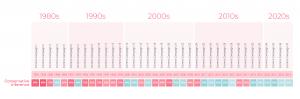
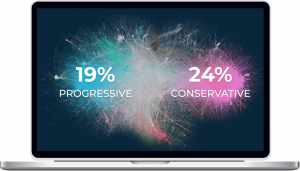
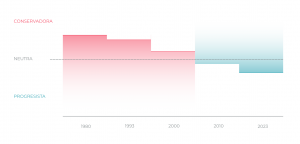
The model enables us to build a historical trend of how a brand is perceived ideologically in a given market, analyzing its ad campaigns from the 1980s to now. This lets us identify patterns, such as brands’ long-term trend to adapt to progressive trends, even for the most conservative brands.
IDEOLOGICAL PERCEPTION
KEY INDICATORS
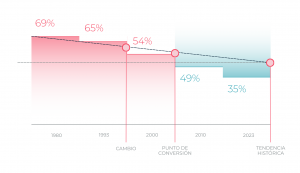
The predictive model analyzes two key variables to estimate the risks associated with taking a stance in a polarized territory:
- Topic: Metrics such as polarization, hostility, and conversation size are evaluated, determining the environment of a discussion territory.
- Brand: The model considers the brand’s current presence in the territory, societal demands, conservatism and intensity of the proposed action, and the brand’s history of ideological alignment.
The model in action
We have tested our model with real cases of companies in four different sectors that, one way or another, found themselves in the headlines and immersed in highly polarized conversations.
BRAND 1 AND BRAND 2 GRAPHIC
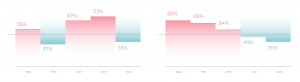
The results have been very revealing and have allowed us to get the model ready to be tested with any brand and context in the 13 countries in which we operate.
As part of the process, several key conclusions have emerged for managing reputation in polarized environments:
- The more a topic is discussed and the more polarized and hostile it becomes, the riskier it is to take a stance.
- The more a brand is called to act and the less it responds, the riskier it becomes to remain silent.
- The more a campaign contradicts the brand’s historical positioning and the greater the campaign intensity, the riskier it becomes.
- Ideological inconsistency and ambiguity increase the risk of action by 60% above average.
- Being deeply involved and required in a specific field creates a strong need to remain active, doubling the risk of inaction compared to the average.
- In most cases where brands have taken risky actions, they have been driven by a desire for anticipation rather than by the potential dangers of remaining passive.
Why rare diseases have become a decisive test for equity, sustainability, and healthcare innovation.
In the vast ecosystem of global health, the word “rare” often carries the weight of isolation and neglect. However, when analyzing the data, rarity reveals itself as a mass phenomenon. It is estimated that 300 million people worldwide live with one of the more than 7,000 identified rare diseases. If these individuals formed a nation, they would be the third most populous country on the planet, only behind China and India. Given such magnitude, silence is not just an absence of sound but a barrier that limits timely access to diagnosis and treatment.
On this Rare Disease Day, visibility cannot remain mere rhetoric: it must translate into public policy, innovation, and real access. Transforming this scenario depends on an unnegotiable tripod: cutting-edge science, strategic visibility, and strengthened advocacy led by patient associations. Without the articulation of these pillars, innovation risks being confined to the laboratory, never effectively reaching those who need it.
The impact of a rare disease is multidimensional and often devastating for the family core. The journey is usually marked by the so-called “diagnostic odyssey”: on average, a patient takes between five and seven years to obtain a clinical confirmation after consulting about eight different specialists (RARE Diseases International, 2024). This delay is not harmless: it allows the progression of irreversible damage and generates profound wear: in the patient’s health, the emotional and economic balance of the family, and the healthcare system.
The socioeconomic and family impact is equally significant. A study by the EveryLife Foundation estimated that the total cost of rare diseases in the United States reached nearly one trillion dollars in a single year, considering both direct costs and productivity loss. This figure illustrates the magnitude of the economic challenge that rare diseases pose to any healthcare system. In contexts with more limited social protection networks, the burden can be even more severe. It is estimated that around 65% of caregivers, mostly women, must abandon their professional careers to fully dedicate themselves to patient care. This reality drags entire families into cycles of chronic financial vulnerability and productive exclusion.
Moreover, mental health is a critical factor. The emotional burden of living with a disease for which about 95% of cases still lack an FDA or EMA-approved treatment (Global Genes, 2024) is considerable. Prolonged uncertainty translates into significantly higher rates of anxiety and depression than those observed in people with prevalent chronic diseases. Those living with a rare disease face a double burden: that of the pathology itself and that of social misunderstanding.
Historically, patient associations were perceived mainly as emotional support networks. Today, they have consolidated as key actors in political and scientific transformation. Contemporary advocacy is not limited to demanding answers: it participates in building solutions. The role of these organizations is fundamental to facilitating access to innovative therapies, such as gene and cell therapies, which require a profound reconfiguration of healthcare systems.
These associations operate in areas where the state and market often do not reach. Regulatory acceleration remains a pending challenge in many countries. Organizations like EURORDIS in Europe, NORD in the United States, and Casa Hunter in Brazil have played a decisive role in positioning before agencies such as ANVISA, the FDA, and the EMA the adoption of more flexible evaluation frameworks that incorporate real-world evidence (RWE). This approach is key when traditional clinical trials are limited by the small number of patients.
Another structural challenge is the lack of patient data and registries. In low-prevalence diseases, information becomes the most strategic asset. In this context, associations promote and organize registries that allow understanding the natural history of the disease, facilitate the development of clinical trials in historically underrepresented populations, and create more favorable conditions for investment in research and development. This not only expands research activity but also promotes greater inclusion and diversity in the generation of available evidence.
However, the greatest challenge remains the sustainability of the system. Pressure on healthcare budgets is a structural reality. Given limited public resources, qualified advocacy participates in designing innovative financing models such as pay-for-performance agreements (risk-sharing), which seek to reconcile the incorporation of disruptive technologies with the financial stability and long-term viability of healthcare systems.
Looking toward rare diseases must become a call for collective action. The reality is not homogeneous: while some countries have consolidated specific regulatory frameworks, such as the Orphan Drug Act in the United States or strategic plans in various European countries, others still face structural challenges ranging from expanding newborn screening to building robust registries.
The potential to lead in genetics and precision medicine exists in multiple regions of the world. However, that leadership will only be sustainable if ecosystems capable of effectively integrating science, public policy, and strategic communication are developed.
Giving voice to people living with a rare disease is not an act of charity: it is a public health obligation and a commitment to human rights. Every time a country incorporates a therapy for a rare disease, it not only expands access; it strengthens the transparency, equity, and humanity of its healthcare system as a whole.
We reaffirm that the rare can no longer remain invisible. How we respond to rare diseases ultimately defines the quality and equity of health systems.
This status places us among the top 3% of Google Partners evaluated in their respective markets, based on performance, client growth, retention, product diversification, and annual advertising investment. Premier Partner status is assessed annually and reflects sustained results across multiple dimensions of the Google Ads ecosystem.
Achieving this recognition goes beyond meeting technical requirements. It reflects consistent performance in driving measurable business outcomes, maintaining advanced certifications across formats, and demonstrating the ability to grow both existing and new client portfolios with strategic rigor.
This milestone strengthens our collaboration with Google across growth, innovation, and performance. Our participation in the International Growth Agency Program (IGAP), an invitation-only initiative, and our certification as Google Marketing Platform further reinforce our capabilities across data, analytics, and scalable performance environments.
Together, these recognitions reflect the strength of our Paid Media practice and the discipline of our teams across markets who continue to elevate performance standards across regions.
As digital ecosystems become more competitive and investment decisions more scrutinized, excellence in paid media is no longer about activation alone. It requires strategic clarity, cross-market coordination, and the ability to translate complexity into sustainable growth.
Partners For What’s Next.
We have been ranked among the Top 10 Private Equity PR Firms in The Deal’s Q4 2025 league tables, securing the #6 position based on transaction activity in the U.S. market.
Published by With Intelligence, The Deal tracks advisory performance across private equity transactions and reflects activity within one of the most competitive segments of the U.S. deal ecosystem.
This recognition reflects sustained activity supporting private equity transactions across fundraising, portfolio company developments, investor communications, and complex strategic processes. In these environments, communication is not peripheral to the transaction, it is part of the execution.
Our work in U.S. private equity forms part of a broader financial communications platform operating across global M&A markets. Earlier this year, Mergermarket recognized us among the top 10 most active PR advisors worldwide in M&A league tables, reinforcing our sustained presence across transactions internationally.
Together, these recognitions reflect consistency, not a single quarter of performance, but continued activity across markets where transactions require clarity, discipline, and strategic alignment.
Thank you to everyone involved in making this possible. Your discipline and focus continue to strengthen our position in one of the most demanding areas of our industry.
Partners for What’s Next.