
-
TrendsDemocracyArtificial Intelligence
-
SectorIT and Communications
-
CountriesGlobal
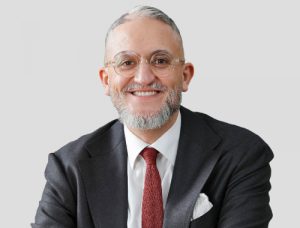

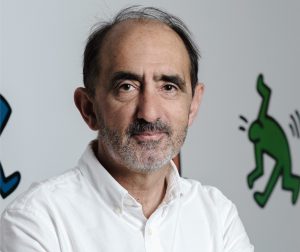
Alejandro Romero: In this issue, we want to address the role of disinformation, the phenomenon of fake news, post-truth, and who owns the narrative, the famous storytelling. It is a pleasure to have Pepa Bueno and Daniel Innerarity here to talk about this. To start, I would like to know, Pepa, how can we define the concept of disinformation?
Pepa Bueno: The first thing to understand is that we live in the ecosystem of disinformation. But it’s hard for us to identify it because we are very much inside it. And this ecosystem clearly plays a relevant role in the way journalism is done. Urgency plays a role in media outlets under a lot of financial stress, with severe economic problems that have a tremendous impact on their business model, and professionals who have to learn new technologies while trying to apply a staff model from classical journalism. By the way: I prefer to say “classical” and not “traditional,” because classical has a noble connotation and always endures, while the label traditional has been imposed on us to sideline us. In any case, classical journalism has to run and tie its shoes at the same time.
But to understand the present moment of this ecosystem, we have to describe three major crises that have affected classical journalism, which should have been the vaccine against disinformation and yet is not. The first is the technological crisis. The emergence of the internet was dismissed and underestimated as something that did not compete with our work or impact our business model. When we realized both were false, it was too late, and all the classical media were in a huge economic crisis. This coincided with the great financial crisis of 2008. And with the credibility crisis of intermediaries that, in my opinion, stems from the breaking of the tacit post-World War II pact in Western societies: you get rich off my work, but I and mine progress.
That pact broke, and from then on all intermediaries we operated in went into crisis. This triple crisis that strikes classical media decimates newsrooms and puts them in competition with social networks, where vertigo and disinformation are part of the ecosystem. And we are still in that battle. A battle that leads us to the emergence of artificial intelligence, which not only competes with us but replaces us.
AR: There are three pillars I think are worth exploring. The first is democracy and how it is affected by disinformation. The second pillar is the role of information professionals, who remain a bulwark, and I love that concept of classical, not traditional, that Pepa mentioned. And it also applies to our classical service offering as a communication firm. And the third is the emergence of technology and the internet and the concept of democratization of information that has often been used to justify that anyone can be a reporter or journalist.
Daniel, what reflections would you make on the first topic, the weakening of democracy?
Daniel Innerarity: Many, and not directly from the world of journalism, because I do not belong to it. But I think I can complement what Pepa said. I believe that basically, what exists is a great difficulty in generating a balanced ecosystem between the media — I used to say “traditional,” but I’m going to start saying “classical” — and social networks. I want to recall that when social networks appeared, we received them as a democratic gain, which was true. I remember living in a provincial town, as they would say in Madrid, where the director of the only newspaper behaved like a feudal lord. To make your opinion count, you had to write a letter to the editor. I’ve told this in class, and students look at me incredulously.
At that moment, that broke, ending a certain bossiness of classical journalism, and therefore there was a horizontalization of information. It was fantastic. The Arab Springs were, of course, going to establish democracy in North Africa. Democracy was unstoppable thanks to this kind of technology. There was the same determinism that we now see negatively, but then positively. And alongside this, we discovered the marvel of a world without intermediaries. Why do we need a journalist? Why do we need a doctor if we have Dr. Google? Why do we need a priest if I can relate directly to God?
Technology has also generated an explosion of available knowledge, of available information, because you enter Google and it’s all there. This has caused individuals who are not professionals in the information world to face an excessive overload. I think the big problem now is not so much that there are people manipulating, which there are, but that people are completely lost in a horizon. This is what makes me now reclaim classical journalism and good journalists: people who, with a different attitude, who don’t act as feudal lords because we won’t tolerate that anymore, help us navigate this chaotic and unregulated cognitive market we have. Therefore, we will have to invent a formula or the figure of someone who filters, selects, prioritizes well, not in an interested way but justifiably, and helps us survive in this chaos.
AR: I agree. In today’s society, I think we must value the importance of the media and journalists as responsible for verifying sources: what is credible, what is trustworthy, and what is not. That is the crux of the matter. And I think someone is needed to take responsibility for that information.
It’s the same in aviation technology. Planes have been ready for years to fly without pilots, but pilots still exist, and if something happens to the plane, we want someone responsible. I think that in classical journalism, that is what we have to value. But let’s move to the risks. Pepa, what risks does this coming disinformation have?
“Democracy is at risk, and we need classical journalism and the information professional who takes responsibility with a signature that the information comes from a verified, credible, and trustworthy source.”
Alejandro Romero
PB: I want to make a brief comment on what Daniel said, which is so suggestive. It’s true that journalism cannot return to the civil pulpit from which it was dislodged by the democratization that the internet signified. But one thing is to abandon the civil pulpit that dictates the rules, and another is to develop the professional method that Alejandro mentioned, which allows organizing, prioritizing, and reporting information with verified sources.
In any case, the risk for me is democracy, and with democracy all the institutions that support it. To put it concretely, the loss of coexistence. We have spent two decades of this century confined in bubbles of ideological comfort, and those bubbles that turned their backs on each other have now entered into direct combat. How does that combat of bubbles and ideological comfort, in which you are constantly agreeing with people who think like you, permeate the physical world, in an era in which the law of the strongest returns? I don’t want to be apocalyptic, but I sense great risks because the other has been objectified and dehumanized a lot, and when you turn on your phone in the morning, you have a daily, permanent battleground. The leap from that to physical life, which is not so far-fetched, puts coexistence at risk.
AR: And how does the power of the algorithm add to that risk, something designed for commercial and marketing purposes so that, for example, if you liked fishing rods, you would get lots of information about them? Now the ideological bubble is brutal because you only receive information from your ideology, and you lose something you mentioned, the contrast of information. I think it’s also necessary to differentiate what is opinion from what is information because there is great confusion.
PB: That is crucial because we are not in the era of over-information; we are in the era of over-opinion.
AR: We are in the era of over-opinion, and it seems that opinion is information. If a certain person tells me something, that is already a dogma of faith, but that is their opinion, not information. Daniel, what do you think the risks are?
DI: First, I think we will have to get used to living in a world a bit more chaotic, a bit more uncomfortable than we had at the end of the last century. It won’t be easy, and only partial, very slow, and limited solutions occur to me. For example, fact-checking to detect very crude lies or rumors with an objectivity criterion.
But there is a risk that is sometimes little discussed and has to do with the instruments we use to face disinformation. These instruments, in turn, must be fully respectful of freedom of expression because otherwise, we can fix one problem but generate a much bigger one. We must bear in mind that the democracy we want to defend at all costs arose from the historical experience that no one had privileged access to the truth and no one held a monopoly on describing reality. And from there, there was an acceptance of pluralism, that we have different interpretations of reality, sometimes very opposed, brutally antagonistic. And that generates discomfort, and surely we would be more comfortable in a universe of greater agreements, and at the same time, it can be considered an achievement.
AR: Another huge risk is the distortion of reality. It seems that by repeating something that is not true, and that is possibly much closer to a lie, it eventually becomes the truth. Because, then, what is truth?
PB: When I talk about journalism, I have stopped using big words. I have stopped using “independence” or “rigor” because they are polysemic. They are used interchangeably by those who come out in the morning with an opinion or turn an anecdote into a big headline and those who do the artisanal and heavy work of journalism, of assessing which is the most important news, which has the greatest impact on people, and we have verified it and have three sources. I no longer speak like that. I say our work consists of an honest approach to reality.
AR: Another great concept. Daniel, after addressing the risks, let’s talk about possible solutions. What would be the solutions for this era dominated by post-truth or disinformation to limit confusion, face the dictatorship of the algorithm, or what role should the media and journalists play?
DI: Let me put on my philosopher mode, which is inevitable in my case, and start by saying that we must make an effort to understand well what is happening, to have good concepts. This is not a fight between good and bad, between those who have a perfect description of reality and those who want to manipulate. Rather, it is fundamentally a chaotic scenario in which some people take advantage. But disorder is prior. We go from a relatively ordered and not very democratic world to a very disordered one and apparently the most democratic we have been able to invent.
I think it is good to make a conceptual clarification, to differentiate a false opinion from a fake opinion. I often say false opinions because it was an opinion, and then I realize it was not correct. But a fake opinion is something quite different. It is something presented as an opinion but is, in fact, manipulation.
I think it is very important that we have conceptual clarity, that we know well the type of world we are living in, and in this scenario, I would underline the limitation of fact-checking because public conversation is not a conversation about the objectivity of things, although that is very important, but about how we interpret things. I usually give an example: when we came out of the economic crisis, the Great Recession, one of the discussions that occupied us for almost a year was whether we had really come out. Why? Because the right and the left, to use these categories, had a different conception of what a healthy, recovered economy was after such a shock. Which of the two was better? I know which was better, but I wouldn’t dare say one was true and the other false. That is, let’s accept that democratic society is one that values pluralism and freedom of expression more, even assuming a certain risk that manipulators have more space than they should. This is a principle I fight hard to maintain.
“We are not in the era of overinformation; we are in the era of overopinion.”
Pepa Bueno
AR: In this conversation, I think we cannot avoid touching on the emergence of artificial intelligence. Daniel, earlier you mentioned Dr. Google, but now we also have Dr. Perplexity, Dr. Cloud, Dr. ChatGPT, who are much more sophisticated. Google facilitated what was previously done with encyclopedias. But now the dimension is different. Pepa, how does generative artificial intelligence, and the agents that have become daily helpers in many of our tasks, affect disinformation?
PB: With artificial intelligence, what happened with the internet happens, but multiplied. I insist a lot on the importance of identifying the ecosystem. Our life, including what relates to artificial intelligence, takes place in five or six places. The owners of those companies, at this moment when everything is geopolitics, are mostly American, one Chinese, and one Russian. For a long time, it was just business, and now, to keep doing business, they have decided to be active in politics. In my opinion, democracy has ceased to be useful to them because it is very heavy, deliberative, you have to get many people to agree, you have to regulate. It has ceased to be useful, and the algorithm, which determines our conversation, our position, the objectification of the other, has decided to enter politics. If we do not identify well that this is the ecosystem and that we are all deeply inside it, even the most educated and informed people, we will hardly be able to coexist in conflict, which is what democracy is.
But freedom of expression cannot cover everything, Daniel, and that comes from a journalist. It cannot cover the civil death of a citizen who thinks differently from you. And we see that every day. Lies, disinformation, campaigns of civil death in the real, physical life of many people and families, many journalists, are being covered. About what you raised about artificial intelligence. Journalists cannot make the same mistake as in 2000 with the internet, which is leaving this tool in the hands of companies. At El País, my firm effort was that from the very beginning there would be editorial criteria, that journalists would be involved in business decisions affecting artificial intelligence, both in acquiring tools and in business and economic strategy.
Artificial intelligence is being used a lot in newsrooms. The first approach, the first protocol in which I was involved, at El País, because at Televisión Española I found it already done when I returned, was that ultimately, just as we live in the era of the individual and everyone’s over-opinion, the journalist is ultimately responsible. The company has responsibility, but one must appeal to the responsibility of individuals when using the tool to tell the reader “I am not deceiving you.” It is I who use this fantastic tool that facilitates many things — it simplifies my translation processes, gives me access to summaries that allow me to save time to focus on the qualitative that I have to offer you as a journalist — but I have commanded this whole process.
AR: And also, by being responsible for that article, that information, or that report, they stake their prestige and personal brand. And I agree it has many positive aspects in terms of research, deep research, access to much more information that must be verified. Daniel, from your point of view, what is the impact of the emergence of AI?
DI: I would answer on two levels, the micro and the macro. At the trade level and the geostrategic level. At the trade level is, of course, journalism, but I am a professor and researcher. And I see the same debate in both fields. Norbert Wiener, one of the fathers of artificial intelligence, said a phrase I repeat a lot because I think it sums it all up. He said that the world of the future will be an increasingly demanding struggle against the limits of our intelligence. We will not be lying comfortably in a hammock served by robot slaves. And I add to “served,” “replaced.” We are not heading toward replacement; we are, especially if we do it well, heading toward a struggle against the limits of our intelligence. And surely philosophers, journalists, political scientists, and engineers will have to ask themselves an uncomfortable question: what I do, does it have added value? What part of what I do really has added value? We have to ask ourselves questions like: could a machine have done what I did this morning? Because maybe you should dedicate yourself to something else, seek competitiveness, but also the satisfaction of struggling against your own limits. I expect a lot from the creativity of professions that will be relieved of tasks that have no value. Of course, now this is uncomfortable but also fascinating.
That would be my answer regarding the micro, the trade. The answer regarding the macro is that we are in a very annoying geopolitical environment in which the big bosses who dominate platforms and technology, the techno-solutionists or feudal lords of technology, do not believe in democracy. There is a strict correlation: the more credulous you are of the power of technology, the less you believe in democracy. Peter Thiel and Elon Musk, all these people, say it openly: with technology, we can solve all humanity’s problems. And at the same time, they say democracy no longer serves to solve any serious problem of humanity. I am very obsessed with exploring that relationship because it seems to me that it is not casual. It is no coincidence that technology is granted healing powers for any social disease and that, deep down, these people who dominate us are very socially illiterate. The most complex thing in the world, humanity’s greatest achievement, is democracy. It is the organization of coexistence in a plural society, articulating values that are hardly compatible.
“I think it is good to make a conceptual distinction, to differentiate a false opinion from a fake opinion.”
Daniel Innineraty
AR: Democracy is uncomfortable because it requires us to agree. And the world of technological corporate dictatorship does not want agreements. Silicon Valley’s concept of breaking everything is based on breaking the structure to recreate it and see if it can be simpler and easier to manage. Because managing the complexity of people is one of the great difficulties of any social, business, or human organization. But let’s start wrapping up and drawing some conclusions. What three key ideas would you take from this dialogue?
PB: First, despite the defeatist tone, I am optimistic. But an optimism informed about journalism and democracy. Although curves are coming in the short term, we all trust a pendulum movement. That there will be a moment when the saturation of noise, data, and uncontextualized images will cause a pendulum movement and a majority of citizens will turn to classical media seeking some understanding of the world. Not to be told what to think but to be given the tools to form their own opinion.
And that is a task that goes beyond journalism, which obviously affects the whole society; it affects public powers, those who have a fundamental role in politics, those who still believe that democracy, that wonderful invention that is only two hundred years old, is worth it as a model of coexistence that appeals to the whole society, that appeals to literacy. Not only that of the young, which I believe is essential; I think the greatest risk is not there but in adults with analog training, digitally arrived. So, optimism, trust in the pendulum movement, and meanwhile, journalism that is very, very flexible with the context and the new ecosystem and with technology, and very firm with the classical journalism protocol. We cannot abdicate from that.
DI: First, I think we will be in a chaotic, unpleasant environment for a long time. It’s not just Trump’s mandate; when a Democrat comes, this will not end. There is a background tectonic movement, a tide, that goes in a disturbing direction. Therefore, we must protect institutions. Let’s educate ourselves. I insist a lot on this. Pepa said years ago that one should spend on newspapers at least what one spends on beers. Well, I would say let’s also spend some money on education. Part of this current polarization, stupid and amateurish, is that the principle of universality of politics and equality of all opinions is confused with the effort to have a somewhat mature opinion, supported by data and opinions.
That on one hand. On the other hand, regarding professions, what do we seek and what do we offer? Right now, I pay people to guide me, not to confirm my opinions. When I go to media, since we are talking in this environment, what I want is for them to guide me, and I begin to suspect when everyone guides me in the same direction. Also, I think it is good to have diversity, contrast of opinions, but what I want is people who offer me something good. I am tired of memes on X.
And at the same time, what do we offer in our profession? If what I want is to consume low-quality but satisfying cinema, Netflix’s algorithm will be fantastic. It works very well and gives you pleasant things. If I want that, fine. But sometimes I want something that surprises me, something truly creative, something disruptive. And there, I won’t find a robot; I will find a flesh-and-blood person, a little crazy, who has gone a bit against the tide. Of course, I want the driver of my bus, the one who gives me the weather information, all these people not to be too creative. But surely in a newsroom, space must be left for the four crazy ones. Even if they are no more.
And then the third thing I wanted to say is that we value what we have. Let’s value democracy. But let’s not make — I have imposed this as a rule on myself because I basically dedicate myself to this — excessively negative descriptions of reality because that is what the bad guys, if you allow me to say so, want. I think Donald Trump is a character who is delighted with certain descriptions made of him, which give him more power than he really has. And on the contrary, I think he feels more uncomfortable when we poke him in the eye and say that democracy, even the American one, has far more elements of resistance than it seems.
PB: I love what you said, Daniel, because I usually say let’s do journalism to help understand the world, not to fear it.
AR: That is an important conclusion and a great headline. I want to thank you both for the space, the conversation, and the ideas. Artificial intelligence will hardly be able to replace these debate tables and live human creativity. Which remains a stimulus for the brain, to learn and think about ideas that I believe are the basis of humanity’s progress. For my part, I agree that we must strengthen democracy. Democracy is at risk, and we need classical journalism and the information professional who takes responsibility with a signature that the information comes from a verified, credible, and trustworthy source. I think what we need is education, to have our own opinion and our own criteria when discussing a topic, and for that, we need to read. And now, also educate ourselves in artificial intelligence and the use of tools.